Strategy · Product · Platforms
The social network Tidal left on the stage
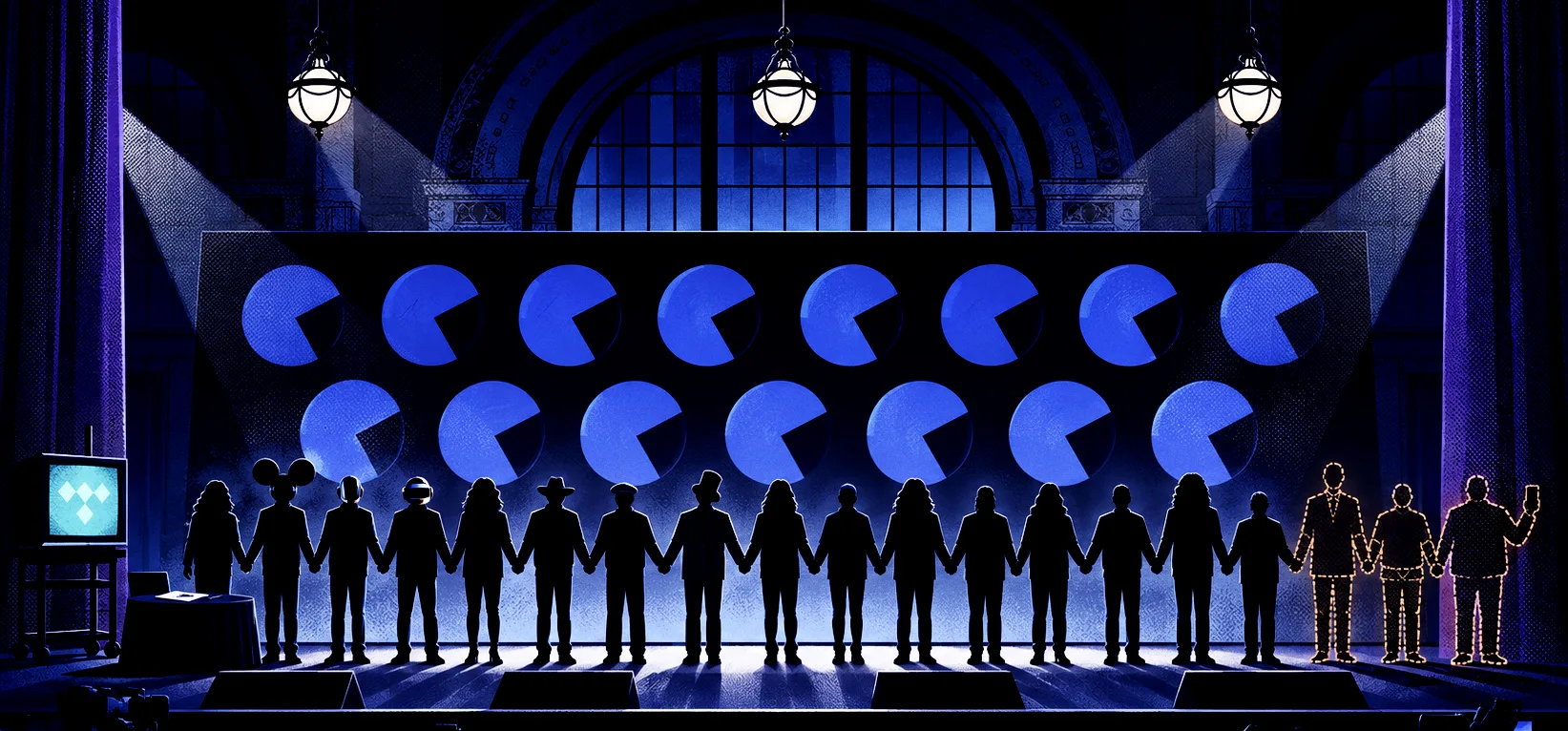
In 2015 sixteen artists held hands to launch Tidal. They had the hardest asset money can't buy, and they spent it on a spec move.
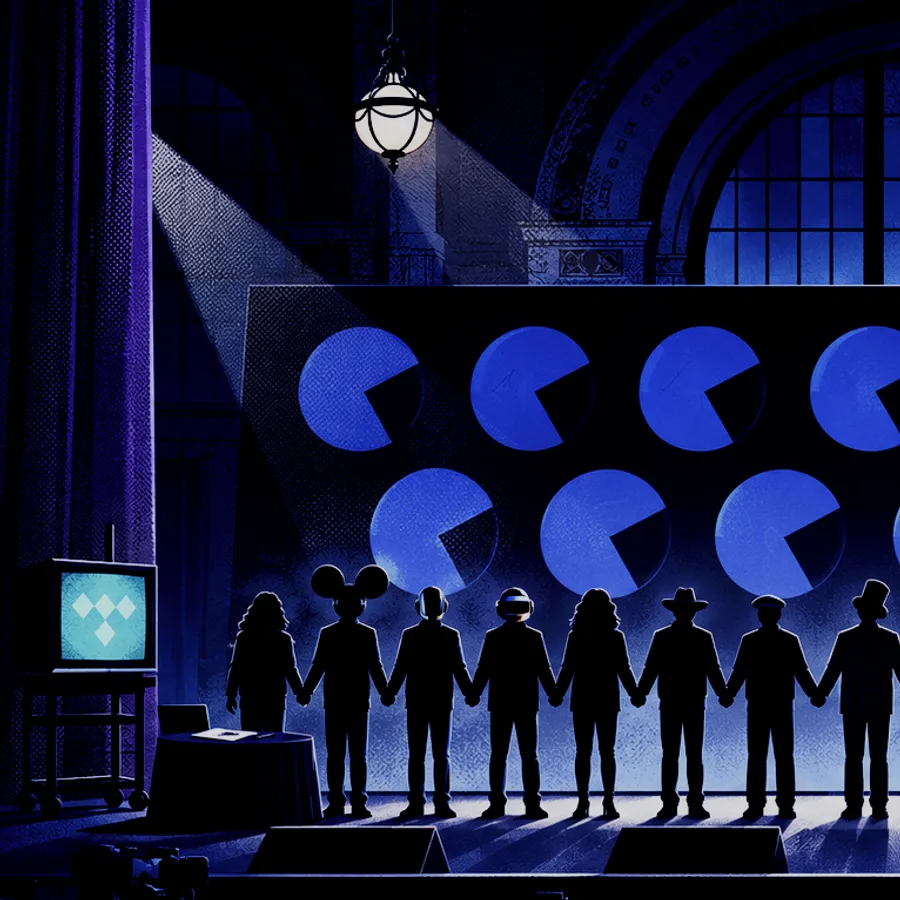
On March 30, 2015, in a converted train station in Manhattan, sixteen of the biggest artists on the planet walked onto a stage dressed in black1. Jay-Z, Beyoncé, Madonna, Kanye, Rihanna, Nicki Minaj, Jack White, Daft Punk with the helmets on. Chris Martin and Calvin Harris showed up on a television someone wheeled in. Alicia Keys called it a graduation and one by one they signed a declaration. Madonna signed with her leg up on the table2. At Vintesh we watched it happening in real time and thought: they’re about to do something completely different.
They didn’t :/ — and we’ve been carrying it ever since, so today we’re putting it down.
What they launched
Spotify with better audio. CD quality instead of MP3, two tiers — $9.99 a month and $19.99 for lossless3 — and the promise of paying artists better because the owners were artists. Two real things. Neither one moves the needle on the internet.
Credit where it’s due: they did go after the access. Twelve days after the launch they announced TIDAL X with an intimate J. Cole show4, and that September they streamed Made in America with artist meetups and backstage video5. But that’s programming: it gets announced, it streams, it ends. What they were holding was good for an ordinary Tuesday, with nobody announcing anything.
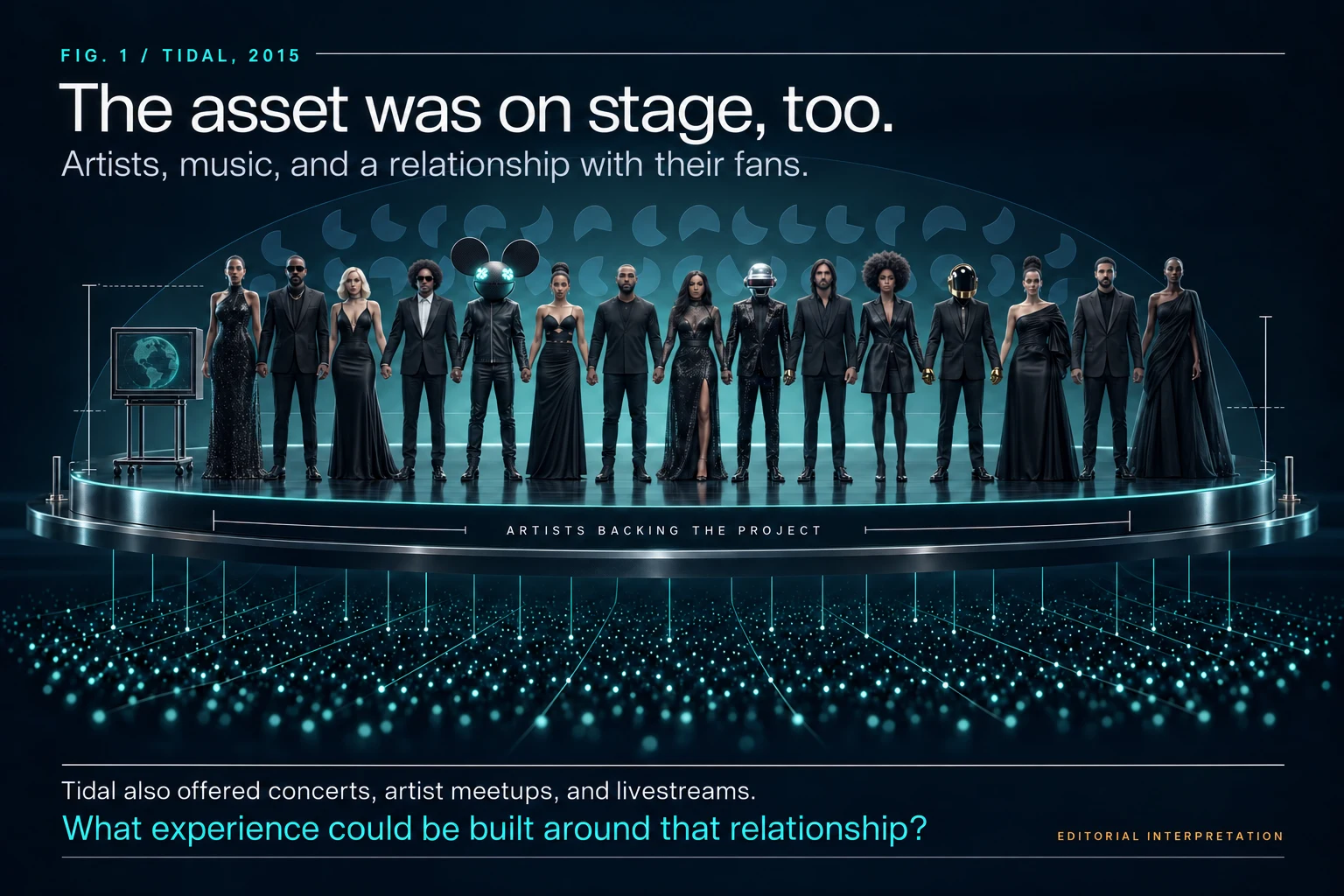
Eleven years later, Tidal is a service for audiophiles. You can tell Jack Dorsey is putting brainpower and heartime — time with heart — into it, but the user base keeps declining.
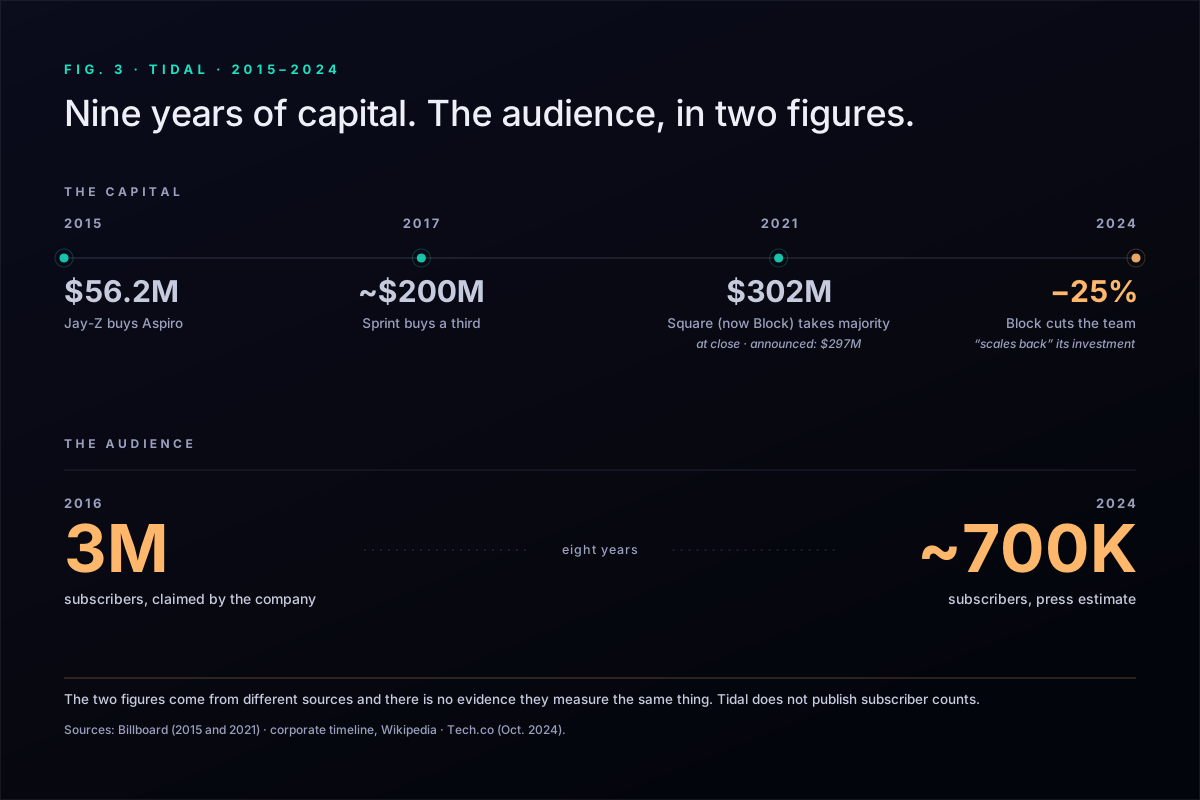
Between 2015 and 2024, Tidal went through three major capital events12. Fig. 3 puts that trajectory next to the audience figures: 3M claimed by the company in 201610 and ~700K estimated by the press in 202411.
What Vintesh had in mind
That stage had something Spotify couldn’t buy, Apple couldn’t buy, nobody could buy: the direct relationship with the most-followed people alive, willing to put their face on a product. That’s the asset. And they spent it on a spec sheet.
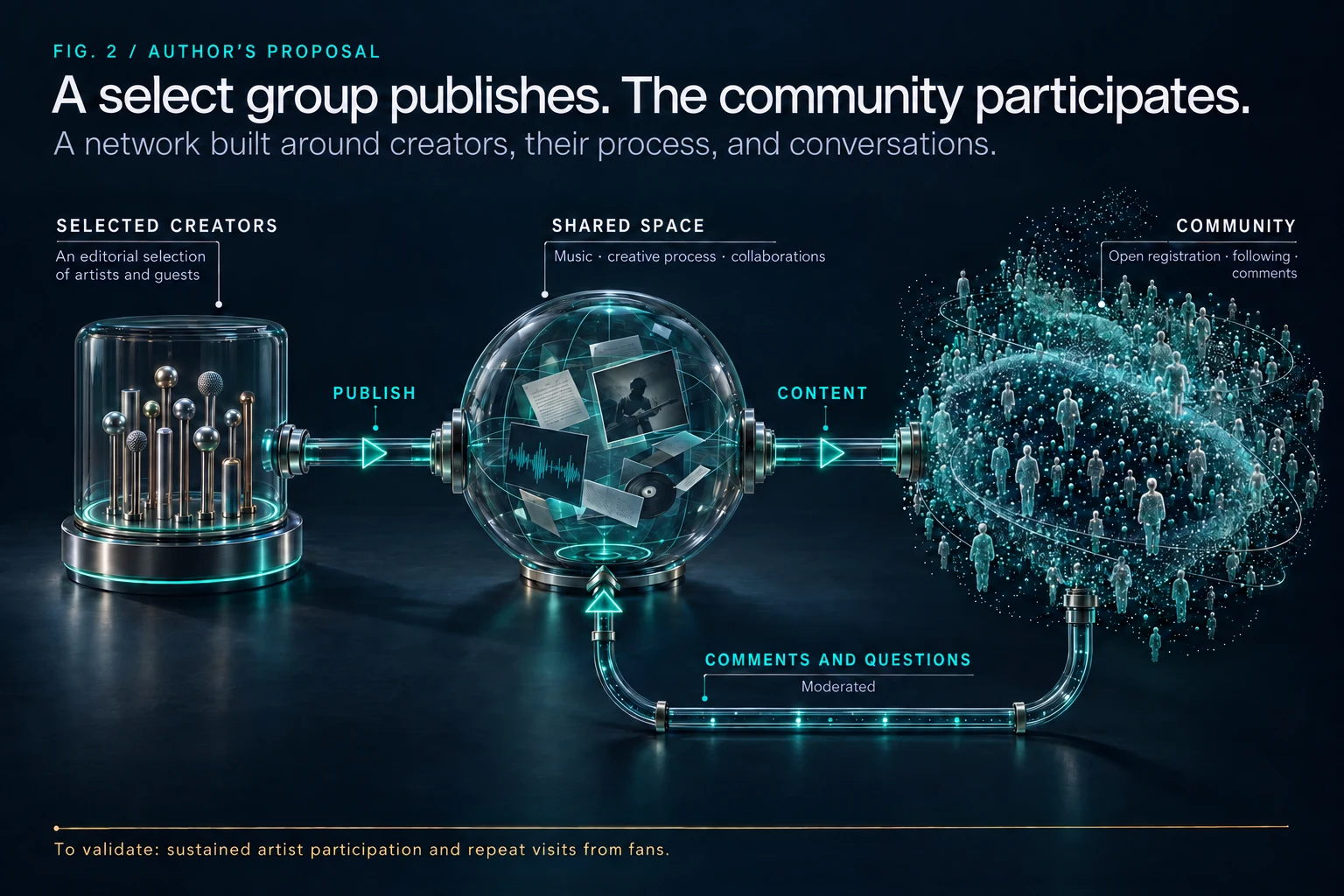
The Vintesh idea was to take the one thing that connects all of us — music — and open a different paradigm of social network. It works like this:
Anyone can sign up to Tidal. But not anyone can post. The only ones posting are Tidal’s founding group: at first the sixteen from that stage, and next to them people who aren’t musicians but are interesting — a Leonardo DiCaprio, a Jeff Bezos, a Vero Pagán. The rest of us comment. It’s window shopping through the lives, the process and the content of a curated group. Everyone can comment; nobody else can post. And the access they were already building for TIDAL X — the concert, the studio, the dressing room — lives inside the app instead of inside a one-off event.
It isn’t a network where everybody shouts. It’s a network where a few speak, millions answer, and the scarcity of the voice is the product.
The format existed. Someone else shipped it.
Here’s the part that still hurts. In February 2023 Instagram launched broadcast channels6: a channel where only the creator posts and followers react and vote in polls — replying inside the channel didn’t arrive until December 20247. That September WhatsApp shipped the same thing, riding on top of an app half the planet already had open, and Zuckerberg announced 500 million monthly users in seven weeks8. Telegram had it earlier. Substack did it with text; OnlyFans and Patreon, with the paywall.
We think — all of that was built by people who didn’t have all of hollywood on stage, but who did understand that the curated voice is a product and audio quality is a feature.
And the final irony: in November 2025 Tidal ships Upload and Spotlight9 — anyone uploads their music, but only what an editor picks gets featured, with cash prizes paid through Cash App — curation as product with hints of what SoundCloud is doing.
What Vintesh brings to the table
This isn’t an article about music. It’s the conversation we have with almost every operator we talk to in Latin America when they walk in saying “we want to do Ai.”
When you’re holding an asset nobody can copy — a relationship, a distribution network, data only you have — the worst play is to ship the category’s default product with a better spec move. That product is a capital race, and it’s won by whoever has the most: Spotify, Apple, Amazon. Tidal ran it with audiophiles against three of the richest companies in history.
The right question isn’t “how do we do the same thing, better?” It’s “what behaviour can only we start?” A co-op with forty years of trust from its members doesn’t need a chatbot; it needs a channel only it can open. A distributor with the route to every corner store in the country doesn’t need a dashboard; it needs the format that turns that route into something nobody else can see.
Tidal had sixteen of the hardest holding hands and turned it into a Spotify. At Vintesh we’re still sore about it. If anyone at Tidal reads this: shit is still up for grabs.
Feed · 1 edition
Strategy
Swipe · tap to open
Save an edition to read it later — it lives in this browser.
 Reading Strategy · 6 min The social network Tidal left on the stage In 2015 sixteen artists held hands to launch Tidal. They had the hardest asset money can't buy, and they spent it on a spec move. Read